
Why "Getting Triggered" Can Be The Best Thing To Happen To You
Humans all come wired with an amazingly intricate early-warning system. It helps us minimize or avoid injury, and serves us well. Left unchecked, though, that service quickly becomes sabotage. Here’s how to tell the difference, and what to do about it.
Introduction
Not long ago, I burned my hand while working on a dirt bike.
It was neat.
Here’s some context.
I’d gotten a call from one of the boys in my neighborhood asking for help getting his dirt bike running. Because motorcycle maintenance and teaching are two of my happy places, it was a no-brainer to run over for a few minutes. The teenager—we’ll call him Taylor—had been working on this thing for hours, and had even gone as far as ordering and replacing the carburetor, but the thing still wasn’t running well.
We fired the bike up together, and I listened and poked around a bit. after just a few minutes, the problem was clear to me: the ratio of fuel to air was way off.
I drew a little diagram for Taylor explaining how the carburetor worked, and then explained what was happening using the old carburetor as a visual aid. Once he understood the principle and what the various screws, flaps, needles, and other bits did, the light bulb came on in his head, and his frustration vanished.
I had brought the tiny, specialized tool needed to make the adjustment (not my first rodeo), and we set the screw to its “baseline” position. This would get us in the ballpark.
The fine tuning can’t happen, though, unless the engine is warmed up properly. we let the bike run for a few minutes, then made the last couple tweaks.
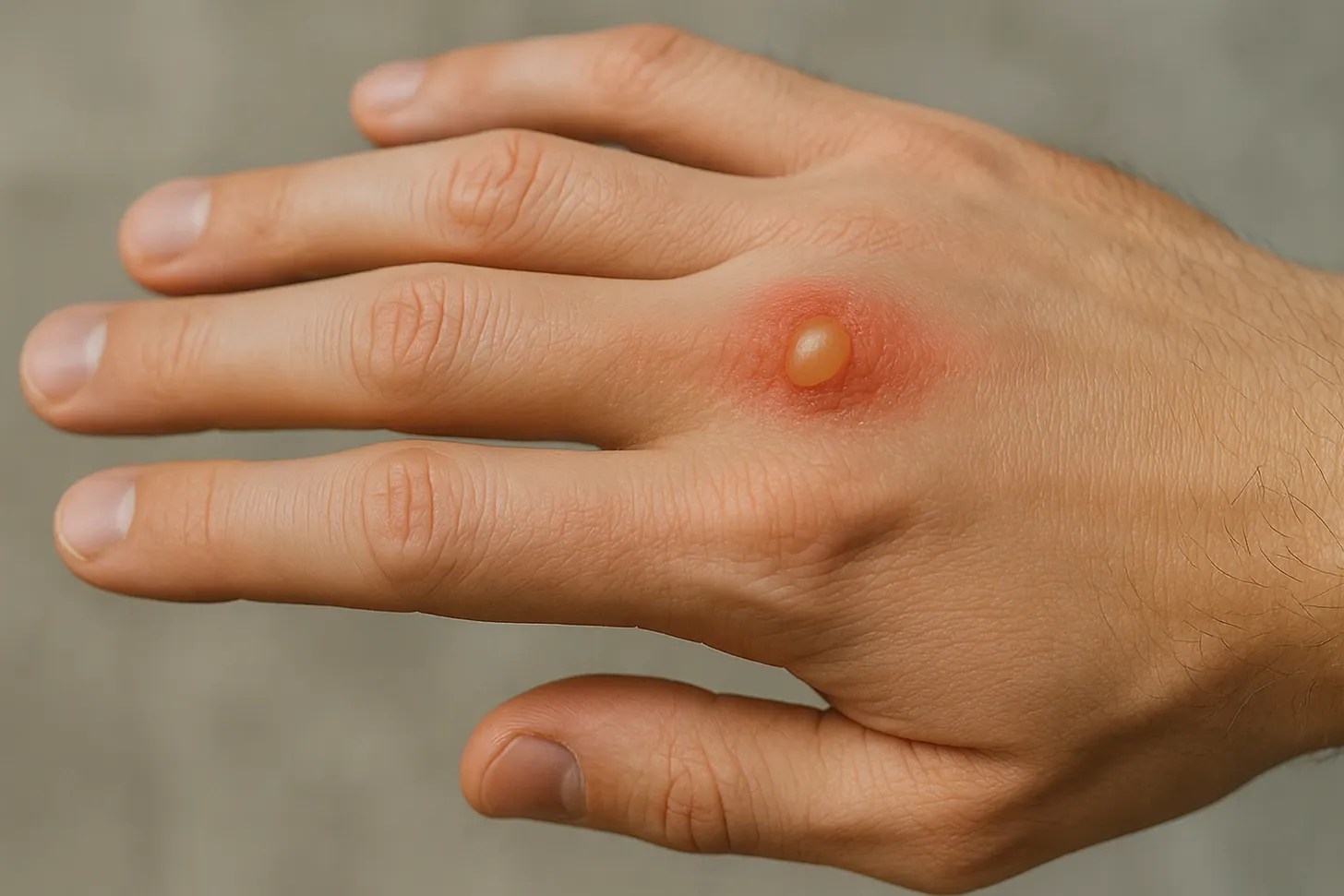
…And one of my bare knuckles bumped the hot motor.
Our Injury-Mitigation System
Okay, maybe that was too much context. But let’s examine what happened in the instant my skin made contact with the engine.
-
There was a rapid transfer of heat from the metal to my skin. Skin doesn’t handle heat nearly as well, it turns out.
-
The heat transfer destroyed some of the tissue, lighting up the nerves threaded through the skin of my knuckle.
-
That nerve signal caused an involuntary muscle response that jerked my hand away. And I may have also flung that little tool.
The result? A very small burn on one knuckle. That involuntary reaction saved me from a deeper, more painful burn - and I didn’t even have to think about it! That’s pretty neat.
Pain in an indicator that something needs adjusting. As human beings, we are designed to respond to pain and make adjustments that will keep us healthy and safe. This is called a somatic reflex arc, and the actual muscle response is actually triggered in our spinal column without our brain even getting involved!
Our Injury-Avoidance System
There’s a secondary system that does involve our brain as well. Once we’ve had some experience with getting burned, we begin to be able to recognize some of the early warning signs and make decisions that could prevent our getting injured entirely.
So when we go to reach for a cast-iron skillet that’s been on a gas stove, we may notice the fire underneath the pan. We may smell that distinct “hot iron” aroma we’ve come to recognize. We may feel the heat radiating off the pan, or see how that heat distorts the air right above it. All these signals get put together to help us recognize that grabbing that handle in this situation may result in a lot of pain, and that maybe we shouldn’t do it.
Again, a very cool feature of being human.
The Importance of Models
One critical element of this injury-avoidance system is the mental model we build to represent potentially harmful situations. All the clues that something might be dangerous get encoded into our subconscious and become the circuitry that triggers the alarm that will alert us to the potential of pain that ultimately cause us to feel fear. Here is an example from this summer:

This is a still photo from my helmet camera as I step to the edge of a 165-foot (50-meter) cliff.
If you have a problem with heights or have a pulse, you probably felt something. That’s your injury-avoidance system doing its job.
Now, pause and think for a moment: how long after seeing that image you feel afraid of falling?
For most people, there is a moment of panic, and then our conscious mind intervenes. “No cliff where we’re sitting. Nowhere to fall. We’re fine.”
Then the moment of fear passes, the injury-avoidance system has done its job, it settles back down, and we go on with life.
Where Things Go Sideways
Life has changed quite a bit in the last 500 years. Very few of us have natural predators stalking us and trying to eat our kids. It’s been a while for most of us since a marauding army has come through burning and pillaging.
Objectively, there are a lot fewer things to be afraid of in our day-to-day. But this injury-avoidance system still wants to be helpful. So we subconsciously begin looking for anything that could cause us discomfort or pain, and do whatever we can to avoid it. The fundamental flaw with this system is that it assumes all pain is dangerous.
Some pain is actually critical to survival. Some of it is really, really good for us. In fact, without the right kinds of pain, some aspects of our lives become significantly more difficult. For example:
-
Avoiding the pain of exercise leads to weakness, obesity, and generally poor health.
-
Avoiding the pain of social awkwardness can lead to loneliness and a very small social support group.
-
Avoiding the pain of learning a new skill can cause us to stagnate and keep us from becoming competent or eventually mastering that skill.
-
Avoiding the pain of hearing different views or opinions creates an echo chamber and limits our potential to learn and grow.
Famed British Statistician George Box once said, "All models are wrong, but some are useful." I’m going to take some liberties and push that way beyond statistics and into this space. I feel that’s appropriate because, after all, a model is a simplified way of seeing the world. Humans use models extensively to make it easier to describe, understand, and sometimes even predict what's happening around us. Like when we might get hurt. If we accept our beliefs and views of ourselves, others, and the world around us as the models they truly are, it should come as no surprise when we occasionally find those views are wrong.
Getting “Triggered”
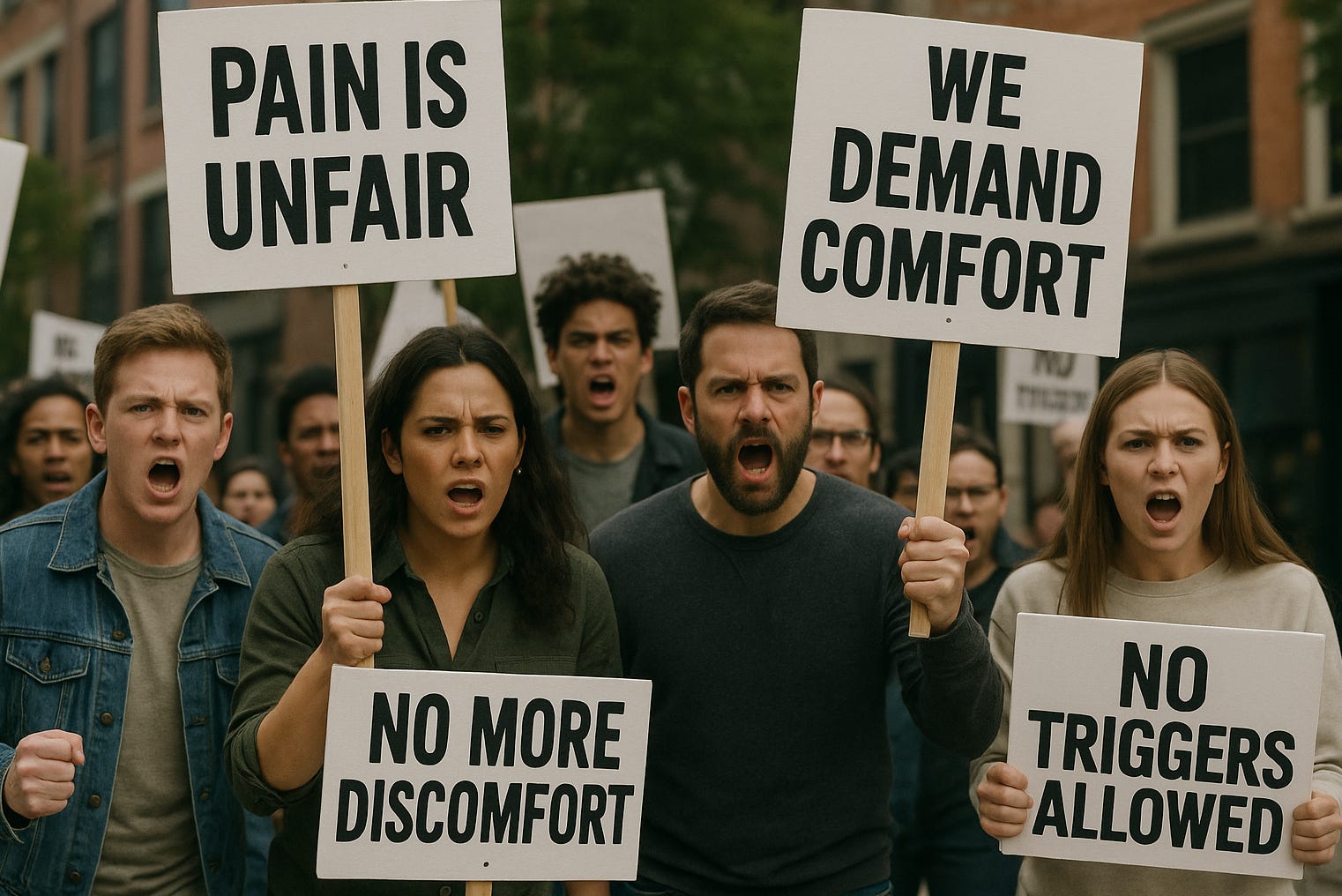
It’s really popular now for some reason to talk about getting “triggered.” Usually this means we’re in a situation where someone says or does something that instantly reminds us of a different situation where we felt some kind of physical or psychological pain. If we have avoided processing and growing through those situations, we can find ourselves instantly back in that situation, feeling all the same feels, and usually one of the biggest feelings included there is this notion that we’re not safe.
Applying what we know about this injury-avoidance system, it makes perfect sense that people will often go to great lengths or make wild requests of others to avoid being triggered. But when we understand why triggers exist - their real purpose - they can become something to explore and embrace rather than avoid.
Sometimes, even under great circumstances, we make a decision or start believing something that isn’t actually true. That misalignment may seem harmless enough, or provide us with some temporary reprieve from whatever discomfort we were facing in that moment, but over time it causes more pain than it alleviates. A trigger is a reminder of a specific part of our “model” that is out of alignment with reality, or with things as they really are. The longer we insist on clinging to this belief, the more pain is caused by that clinging, and the more easily triggered we become.
What to Do
When you get triggered, it’s because of the same system that fired when you saw that cliff video — the same flash of alarm meant to keep you alive.
The cascade of memories that follow are clues that point to something from the past that needs your attention. It could be trauma you haven’t fully healed from. It could be something that doesn’t make sense based on your current “model.” In my experience, it has often been those decisions or beliefs that I’m trying to bend reality to fit into.
Problem is, reality doesn’t bend for long. It always seems to snap back.
So the next time you experience a triggering event, try pausing and looking for the message underneath the response. Your conscious mind has the ability to step in and remind you, just like in the video: there is no cliff here. The danger isn’t real, even if the memory of it is. What we’re feeling isn’t proof that we’re unsafe; it’s a signal that an old part of us hasn’t yet realized we’re standing on solid ground. Ask yourself:
-
What is it about this situation that bothers me so much? Why does this matter so much to me
-
What memories are tied to this feeling?
-
Where might I have started believing something that wasn’t aligned with reality?
-
What can I learn from these experiences?
-
What do I need to do now to move forward?
Conclusion
With a little practice, we can get better at differentiating pain that is dangerous or damaging from pain that actually drives progress. We may even celebrate those moments, painful as they may be, because they inherently provide an opportunity to bring our beliefs and views more inline with reality, to refine and update our internal "model."
Here’s what I know to be true: hidden behind some of the pain you may be avoiding in your life is a vast sea of potential. If you’re willing to look harder at it, and then push through it, there’s something waiting for you on the other side of that pain.
It’s a better, stronger, more amazing you.
Keep moving. If you need help, reach out.
~Aaron


Responses